As a preschool English teacher, I am usually less interested in how colourful a children’s platform looks than in what the child is actually asked to do.
Does the child listen and respond? Does the teacher adjust when attention drops? Are games connected to a language goal? Can a parent understand what happened after the lesson?
Those are the questions I focused on while reviewing what happens in a Flalingo Kids lesson.
I looked at the current lesson structure, age pathways, teacher model, free learning resources and a completed first-lesson report. What I found is a live one-to-one model in which the lesson changes according to the child’s age and current English ability rather than following one fixed format for every learner.
That distinction matters. A preschool child and a ten-year-old beginner may both need basic English, but they should not be taught in the same way.
🔎 Reliability Note:
I reviewed Flalingo Kids from the perspective of an early-childhood English teacher. This article uses the current course structure and a completed first-lesson report to explain how the process works. One child’s lesson should not be treated as evidence that every learner will respond or progress in the same way.
Short Summary
Short Summary
Flalingo Kids uses live one-to-one lessons with different learning paths for ages 3–5, 6–8, 9–12 and 13+. In the first lesson I examined, the teacher used greetings, movement, pictures and guided speaking to identify the child’s starting point. The parent report then turned those observations into clear next steps.
The Starting Point: Age, Goal and Current Level
One thing I liked about the structure is that age and English level are treated as two separate questions.
Flalingo Kids currently has learning paths for ages 3–5, 6–8, 9–12 and 13+. This makes pedagogical sense.
A ten-year-old who is new to English may need beginner vocabulary, but giving that child preschool songs and toddler-style activities simply because the language is easy would not be appropriate. The vocabulary difficulty and the presentation method both need to fit the learner.
For a three- or four-year-old, meanwhile, I would expect much more movement, imitation, repetition and visual support. At this stage, following a simple instruction such as “Touch your nose” can tell me more about comprehension than asking the child to complete a grammar exercise.
Flalingo also has a separate children’s level assessment that can be used before choosing a longer learning path.
I would use the level result as a starting reference rather than treating it as the whole picture. With young children especially, I also want to see how they respond to a real teacher.
What Should the Parent Decide First?
Before choosing a teacher, I would define one practical priority.
For example:
-
Is the child completely new to English?
-
Do they understand English but avoid speaking?
-
Do they need support with school English?
-
Are reading and vocabulary becoming more important?
-
Is the family preparing for an international school or move abroad?
A clear goal makes the trial lesson easier to evaluate.
Choosing a Suitable Teacher
Flalingo Kids uses teacher matching to narrow the available options according to the child’s profile.
I see the matching stage mainly as a way to reduce random teacher selection. The more important test comes during the live lesson, because teacher-child compatibility cannot be judged from a profile alone.
When I watch a first lesson, I would pay attention to whether the teacher:
-
Gives the child enough time to respond
-
Simplifies an instruction when necessary
-
Uses visual or physical support naturally
-
Changes the task when attention decreases
-
Encourages speaking without making every response feel like a test
These behaviours tell me more about teacher fit than a profile description does.
👩🏫
TeacherTest compatibility
💻
TrialObserve the interaction
What the Process Looks Like
From a parent’s perspective, the process I reviewed is fairly straightforward:
Child profile → Level estimate → Teacher options → Live trial → Parent report
Before the Lesson
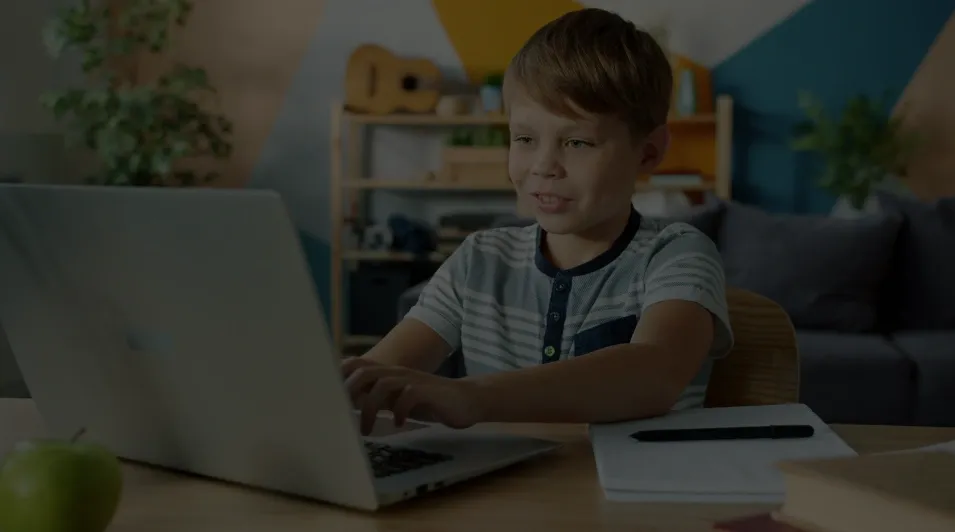
For younger children, I recommend keeping the setup simple. The child needs clear audio, a working camera and enough physical space to move. A familiar toy or picture can also be useful because it gives the teacher something comfortable to talk about if the child is initially quiet.
Parents may need to stay nearby during a preschool trial, especially for technical help. However, I would avoid answering for the child unless help is genuinely needed.
Silence gives the teacher information too. The child may be processing the instruction, waiting for a visual clue or deciding whether they feel comfortable enough to respond.
During the Lesson
The opening should feel easy. A young learner might begin with:
-
A greeting song
-
Their name
-
Colours or animals
-
A picture
-
Movement
-
Imitation
The point is not to test everything the child knows in the first five minutes. The teacher first needs to establish communication. After that, the lesson can move toward a clearer vocabulary or speaking target.
After the Lesson
This is where the experience becomes particularly useful for parents. Instead of only seeing whether the child appeared happy on camera, the parent can review what the teacher observed and what the next lesson should focus on.
A Typical Flalingo Kids Lesson
The exact structure changes with age and level, but the lessons I reviewed follow a recognisable learning cycle.
1. Welcome and Connection
The teacher creates a comfortable opening before introducing a learning task. For a preschool child, that might mean singing, waving or talking about a toy. An older child can begin with a short conversation.
2. Review
Familiar words or sentence patterns are briefly recycled. I consider this important because young children benefit greatly from repetition. Constantly introducing new vocabulary without returning to earlier language can create the appearance of progress without enough retention.
3. New Language in Context
New language is introduced through an activity rather than as an isolated word list. Depending on age, this could involve a picture, story, song, movement activity, reading text or discussion.
4. Active Response
This is the stage I would watch most closely. The child should not spend most of the lesson watching the teacher or clicking animations. They need to produce some kind of meaningful response.
For a preschool learner, that may mean pointing, moving, choosing or repeating. For an older child, it may mean answering a question, describing a picture or building several connected sentences.
5. Review and Closing
The teacher briefly returns to the lesson target and identifies what should come next.
🔁
ReviewRecall earlier language
How the Lesson Changes by Age
🎒
Ages 3–5
Songs, movement, visual support, repetition and short spoken responses.
📚
Ages 6–8
Stories, phonics, short questions, reading foundations and simple sentences.
🎯
Ages 9–12
Longer speaking, projects, wider vocabulary, reading and grammar in context.
🚀
Ages 13+
Discussion, academic language, presentations, writing and future goals.
This difference is one of the parts I find pedagogically sound. A three-year-old should not be judged by how many full sentences they produce. Following an English instruction, recognising a picture or responding through movement may already be meaningful evidence of comprehension.
A twelve-year-old should naturally be expected to do much more with the language.
For more guidance on matching lesson content, teaching style and expectations to each age group, read How to Choose an English Course for Your Child’s Age.
A Real First-Lesson Example: Zeynep
To see how the model works with a real child, I examined a completed 25-minute lesson for a learner named Zeynep.
The lesson theme was Animals and Feelings, and her starting point was recorded as Pre-A1 / Pre-A1 Starters. The report described her as able to recognise familiar animal and emotion vocabulary with visual support, respond with single words or short patterns and follow movement-based instructions with teacher modelling.
Starting with a Greeting
The lesson began with a hello song. Zeynep responded to the teacher and used the phrase:
“Nice to meet you.”
She also answered yes-or-no questions when the teacher checked the screen and sound. For me, this is a more useful first observation than asking a young beginner to identify grammar rules. It shows whether the child is willing to enter a basic English interaction with an unfamiliar adult.
Listening Through Movement
Later, the teacher asked Zeynep to touch her nose, mouth and head. She followed those instructions and also participated in counting, jumping and clapping activities.
From an early-childhood teaching perspective, I particularly liked this part. At preschool age, children can demonstrate understanding physically before they are able or willing to express the same understanding in complete sentences.
Animals, Feelings and Sound Imitation
The lesson then moved into animals and emotions. Zeynep repeated cat, joined bird and duck sounds and repeated words including sad and angry. The activity therefore allowed several forms of participation:
-
Listening
-
Moving
-
Imitating sounds
-
Repeating vocabulary
-
Answering simple questions
-
Using a complete social phrase
The point was not to teach a large number of new words in 25 minutes. The useful outcome was establishing how Zeynep responded to different types of English input.
What the First Lesson Actually Established
By the end of the class, the teacher had evidence that Zeynep could follow familiar physical instructions, imitate sounds, respond to simple questions and participate in a first English interaction.
Sentence building was still developing. The report therefore moved the next goal from isolated words toward short patterns such as:
dog → It is a dog.
happy → I am happy.
That is an appropriate next step for this starting point.
✓
My Take on the First Lesson
The strongest part of this first lesson was not the amount of vocabulary covered. It was the variety of ways the teacher checked understanding: listening, movement, imitation and short spoken responses. That gave a clearer starting point without turning a preschool lesson into a formal test.
The Proposed Learning Plan
The report also included a proposed 12-week roadmap.
Its first phase focused on basic vocabulary and sentence patterns, followed by simple comprehension and expression, then short independent speaking activities.
I would treat this as a teaching plan, not a progress guarantee. A roadmap can show what the teacher intends to teach. It cannot predict exactly how quickly an individual child will acquire those skills.
Teacher Continuity and Feedback
For children, teacher continuity matters more to me than having an enormous tutor catalogue. Young learners often need time to become comfortable with a teacher.
Once that relationship develops, the teacher begins to understand how long the child needs before answering, what topics create engagement and when the activity needs to change.
The same teacher can also remember whether the child struggled with a particular sentence in the previous class. That makes repetition more purposeful. However, I would not keep the same teacher simply for the sake of continuity.
If the child repeatedly appears uncomfortable, gets very little speaking time or does not respond to the teacher’s style, changing teachers can be the better decision. Continuity is useful after a suitable match is found.
Tracking Progress Through Parent Reports
This was one of the sections I found most useful from a parent’s perspective. Young children often finish an English lesson and answer:
“What did you do?”
with:
“Nothing.”
That does not tell a parent much.
The first-lesson report I examined was considerably more specific. It included a short video from the actual lesson, the starting level, teacher observations, performance areas, vocabulary, strengths, development areas and a proposed learning roadmap.
The Short Lesson Clip
The report includes a one-minute excerpt from the real class.
For a parent, this makes it possible to see:
-
How the teacher speaks to the child
-
Whether the child responds independently
-
What type of activity is used
-
How comfortable the interaction appears
I find this especially useful because parents do not need to judge the lesson only through a score.
Starting Point and Performance
Zeynep’s report separated areas such as:
-
Participation
-
Listening and following
-
Speaking courage
-
Vocabulary
-
Sentence building
The distinction is important. A child can show strong listening comprehension while still producing very little language.
In Zeynep’s case, following the body instructions was recorded separately from sentence production.
Strengths and Development Areas
The report linked observations to actual classroom behaviour rather than only giving generic praise. For example, Zeynep’s movement responses supported the listening assessment, while her imitation of animal sounds and emotion words helped identify how she responded to new language.
Sentence production remained an area for further development. This is the kind of parent feedback I prefer.
“Great job today” is encouraging, but it does not help a family understand what the child is learning.
🎥
Lesson MomentSee a real part of the interaction
📍
Starting PointUnderstand current ability
👩🏫
Teacher NoteRead specific observations
⭐
StrengthsSee what already works
🎯
Focus AreasIdentify what comes next
🗺️
RoadmapFollow the proposed direction
Can This Type of Lesson Build Speaking Confidence?
It can support confidence, but I would be careful about promising that one-to-one lessons automatically create a confident speaker. Confidence grows through repeated successful communication. For a young beginner, the progression might look like this:
Understand→Respond→Feel successful→Repeat→Speak more
- A shy child does not necessarily need to begin with full sentences.
- Pointing to the correct picture can be the first step.
- Then comes a single word.
- Then a short phrase.
- Later, the teacher can expect a complete answer.
- I prefer this gradual approach to repeatedly telling a quiet child, “Come on, speak English.”
- The teacher still needs to correct mistakes, but timing matters. Constant interruption can make a young learner more cautious about speaking.
What Changed—and What Did Not
The clearest thing to say about Zeynep’s lesson is that her English level did not suddenly change in 25 minutes. What changed was the amount of information available.
Before the lesson, it was unclear how she would respond to English instructions or a new teacher. After the lesson, several things had been observed.
| Before the Trial | What Became Visible | What Still Needs Time |
|---|
| Teacher-child interaction unknown | She responded to the new teacher | Long-term teacher compatibility |
| Listening ability unclear | She followed movement instructions | Understanding more complex English |
| Spoken vocabulary unclear | She repeated familiar and new words | Independent vocabulary use |
| Sentence ability unclear | She used one complete social phrase | Longer independent sentences |
My Honest Takeaway
The strongest part of the Flalingo Kids model, in my view, is not the gamification itself. There are many children’s English platforms with games, bright visuals and rewards.
What stands out more is the combination of:
- live one-to-one interaction + the possibility of teacher continuity + detailed parent visibility
- For a parent, that makes it easier to understand not only whether the child enjoyed the class, but what actually happened during it.
A live one-to-one programme requires scheduled attendance and usually costs more than an app-only subscription. The first teacher may not be the right long-term match, and progress still depends on regular exposure and practice.
Families interested in visually engaging, gamified lesson models can also explore the Best Novakid Alternatives for Kids.
What I Liked
- ✓Age-specific lesson structure
- ✓Live individual interaction
- ✓Specific parent-facing feedback
What Parents Should Consider
- •It requires regular scheduling
- •Teacher fit still needs to be tested
- •Reports do not replace consistent practice
I think this model is most relevant for families who want structured, teacher-led English rather than independent app practice alone.
Tips Before Your Child’s First Lesson
Choose the Timing Carefully
Do not test a teacher for the first time when the child is hungry, tired or rushing between activities.
For preschool children especially, timing can change the entire lesson.
Do Not Present It as an Exam
I would simply say:
- “You’re going to meet an English teacher and play some activities together.”
That creates a very different emotional expectation from:
- “Let’s see how much English you know.”
Stay Nearby Without Answering
Technical support is fine.
Answering every English question is not.
The teacher needs enough space to see what the child understands independently.
Tell the Teacher About Real Interests
Animals, dinosaurs, drawing, football, space, dolls or a favourite story can all create a much easier first interaction.
Judge the Interaction, Not Only the Material
After the lesson, I would ask:
-
Did my child understand at least some instructions?
-
Did the teacher wait for a response?
-
Was my child active rather than passive?
-
Did the teacher adapt when necessary?
-
Did my child appear comfortable making mistakes?
-
Would my child willingly meet this teacher again?
Those questions tell you much more than whether the slides looked attractive.
Free Practice Between Lessons
I also checked the free resources around the Flalingo Kids ecosystem. There is a free children’s level assessment, a separate story library and a games site.
I would treat these as supporting tools rather than substitutes for the live lesson. Their main value is giving parents an easy way to revisit English between classes without creating another formal study session.
Final Takeaway
After looking closely at the lesson structure and the real first-lesson report, I would describe Flalingo Kids as a teacher-led one-to-one programme with gamified elements, rather than a gamified app with a teacher added to it.
That difference matters. In Zeynep’s 25-minute lesson, the meaningful evidence came from very small moments: responding to a greeting, following a body instruction, imitating an animal sound and using a complete phrase.
For a young learner, those moments can tell a teacher a great deal. The first lesson did not prove that Zeynep would become fluent or reach the next level within a fixed number of weeks.
It answered something more useful:
What can she do now, how does she respond to this teacher and what should they work on next?
For parents considering Flalingo Kids, that is how I would use the trial lesson too. Do not try to decide whether the entire course “works” after 25 minutes.
Use it to decide whether this teaching approach, this teacher and this lesson environment make sense for your child.
To compare this lesson model with a wider range of children’s platforms, explore Best Online English Courses for Kids in 2026: Parent’s Guide
FAQ
What does a Flalingo Kids lesson look like?
The lessons are live and one-to-one, but the activities change with age and level. Younger learners may use songs, movement, pictures and short responses, while older children move toward longer speaking, reading and project work. I would judge the lesson mainly by how actively the child uses English.
How long does it take to see progress?
There is no reliable fixed timeline. Parents may first notice smaller changes such as following instructions more easily, remembering familiar vocabulary or answering with less support. Progress depends on the child’s starting point, lesson frequency, teacher relationship and exposure to English between lessons.
Can my child continue with the same teacher?
Flalingo Kids allows repeat bookings with a preferred teacher when suitable times are available. I see continuity as useful once a good teacher-child relationship has been established. Parents should still consider changing teachers when the child consistently struggles with the communication or teaching style.
How is my child’s progress measured?
The first-lesson report I examined included the child’s starting level, teacher observations, participation, listening, speaking confidence, vocabulary, sentence building, strengths and development areas. I would follow these patterns across several lessons rather than treating one report as proof of long-term progress.
Can Flalingo Kids help with speaking confidence?
The private lesson format and teacher continuity can create a lower-pressure environment, particularly for shy children. Confidence still develops gradually. The teacher needs to give the child enough time to respond, accept imperfect language and increase speaking expectations step by step.
Is the Flalingo Kids trial lesson free?
The current Flalingo Kids booking flow offers a free trial lesson, although campaign conditions can change. I would use the trial mainly to evaluate teacher compatibility, lesson pacing and how comfortably the child participates rather than trying to measure language progress after a single class.